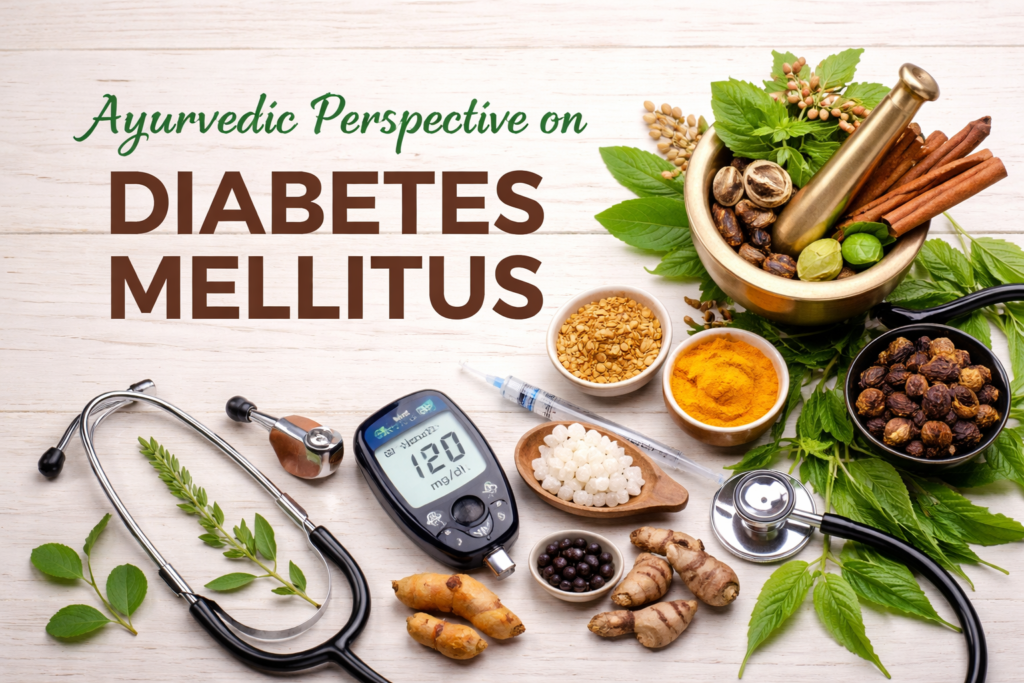
Ayurvedic Perspective on Diabetes Mellitus (Madhumeha)
Diabetes Mellitus is a chronic metabolic condition characterised by elevated blood sugar levels due to impaired insulin function or secretion. While modern medicine explains diabetes through insulin resistance and pancreatic dysfunction, Ayurveda approaches diabetes holistically, focusing on imbalances in bodily energies (Doshas), digestion (Agni), and tissue metabolism (Dhatus).
In Ayurveda, diabetes is broadly classified under Prameha, with Madhumeha being the most severe and chronic form.
🔬 Understanding Diabetes in Ayurveda
According to Ayurvedic texts, Prameha is primarily caused by:
- Excessive intake of heavy, oily, sweet, and processed foods
- Sedentary lifestyle and lack of physical activity
- Disturbed digestion (Mandagni)
- Accumulation of metabolic toxins (Ama)
These factors lead to the vitiation of Kapha Dosha, followed by involvement of Pitta and Vata, affecting the body’s ability to properly metabolise sugars and fluids.
Madhumeha is described as a condition where the urine becomes sweet-like (Madhu), reflecting systemic metabolic imbalance rather than an isolated pancreatic disorder.
⚖️ Dosha Involvement in Diabetes
- Kapha Dosha: Initiates the condition through heaviness, lethargy, weight gain, and insulin resistance
- Pitta Dosha: Contributes to inflammation, excessive thirst, hunger, and metabolic disturbances
- Vata Dosha: Dominates in chronic stages, leading to fatigue, weight loss, nerve complications, and tissue depletion
Effective management requires balancing all three doshas, with emphasis on Kapha reduction and Vata stabilisation.
🌿 Ayurvedic Management Approach
Ayurveda does not aim for quick sugar reduction alone. Instead, it focuses on restoring metabolic balance and preventing long-term complications.
1️⃣ Diet (Ahara)
- Emphasis on light, fibre-rich, and low-glycaemic foods
- Inclusion of bitter, astringent, and pungent tastes
- Avoidance of refined sugar, excess rice, fried foods, and dairy
Commonly recommended foods include barley (Yava), green leafy vegetables, gourds, and legumes.
2️⃣ Lifestyle (Vihara)
- Regular physical activity such as walking or yoga
- Avoiding day sleep and late-night eating
- Stress management through breathing practices and meditation
3️⃣ Herbal Support (Aushadha)
Ayurvedic herbs traditionally used to support blood sugar balance include:
- Gymnema sylvestre (Gurmar)
- Vijaysar (Pterocarpus marsupium)
- Gudmar, Amalaki, Haridra, and Shilajit
These herbs are often combined into formulations to support glucose metabolism, digestion, and tissue nourishment.
🧠 Prevention & Long-Term Wellness
Ayurveda emphasises early intervention and preventive care. Individuals with family history, obesity, or pre-diabetic tendencies are encouraged to adopt dietary discipline, regular activity, and seasonal detoxification under professional guidance.
Consistent lifestyle correction plays a vital role in preventing progression and complications affecting nerves, kidneys, eyes, and cardiovascular health.
🌱 Conclusion
From an Ayurvedic perspective, Diabetes Mellitus is not merely a disorder of blood sugar, but a reflection of long-standing metabolic imbalance. A personalised approach that integrates diet, lifestyle, herbal support, and mental well-being offers a sustainable path toward long-term health and balance.
Ayurveda reminds us that managing diabetes is not just about controlling numbers, but about restoring harmony within the body.